Moving into your first apartment is an exciting experience. It is your chance to create a space that reflects your personality, lifestyle, and taste. However, decorating a first apartment can feel challenging when you have a limited budget, small rooms, or little furniture.
The good news is that you do not need expensive furniture or a large space to create a beautiful home. With thoughtful planning, smart storage, and a few creative decorating ideas, you can make your apartment feel cozy, stylish, and welcoming.
In this guide, you will discover 27 first apartment decorating ideas that combine comfort, function, and modern style. Whether you love minimalist interiors, cozy spaces, or modern apartment decor, these ideas can help you create a home you will enjoy.
1. Choose a Decorating Style
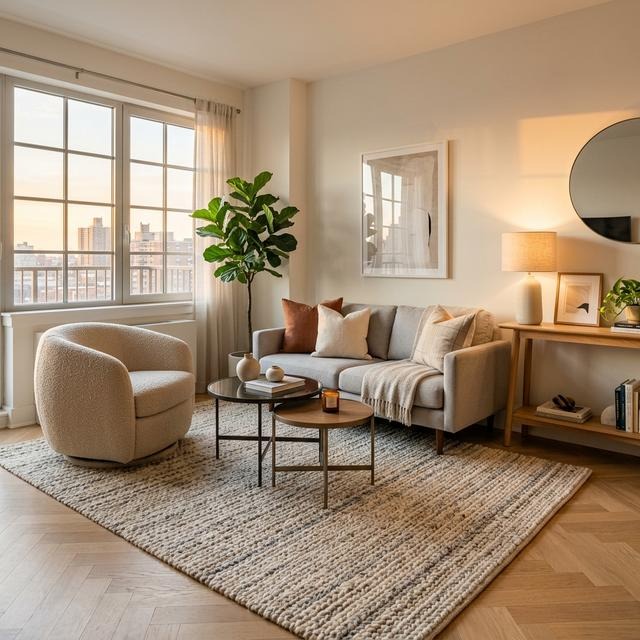
Before buying furniture or accessories, decide on a decorating style. Choosing a clear direction helps your apartment look coordinated rather than crowded. You might prefer modern, minimalist, boho, Scandinavian, or warm farmhouse decor. Start by saving pictures of rooms you love and identifying common colors, materials, and furniture shapes.
You do not need to follow one style perfectly. Mix elements that reflect your personality while keeping a consistent color palette. A simple design plan can also prevent unnecessary spending. Focus on creating a home that feels comfortable and personal instead of copying an entire showroom.
2. Start With a Neutral Color Palette
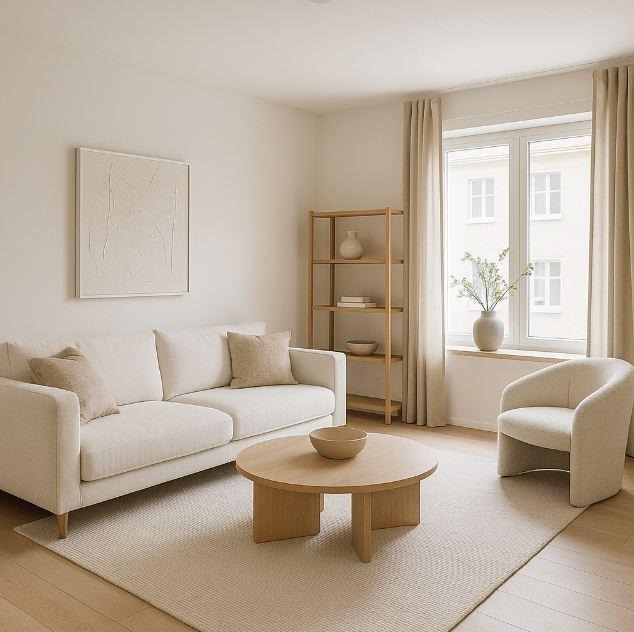
Neutral colors can make your first apartment feel calm, bright, and easy to decorate. Shades such as white, beige, cream, gray, and soft taupe work well as a foundation for different design styles. They also allow you to introduce color through pillows, artwork, rugs, and decorative objects.
If your apartment already has painted walls or fixed flooring, use those features as a starting point. Add two or three complementary shades instead of choosing too many colors. For a warmer look, combine cream walls with natural wood and soft brown accents. A neutral palette does not have to feel boring when you include different textures and layers.
3. Invest in a Comfortable Sofa
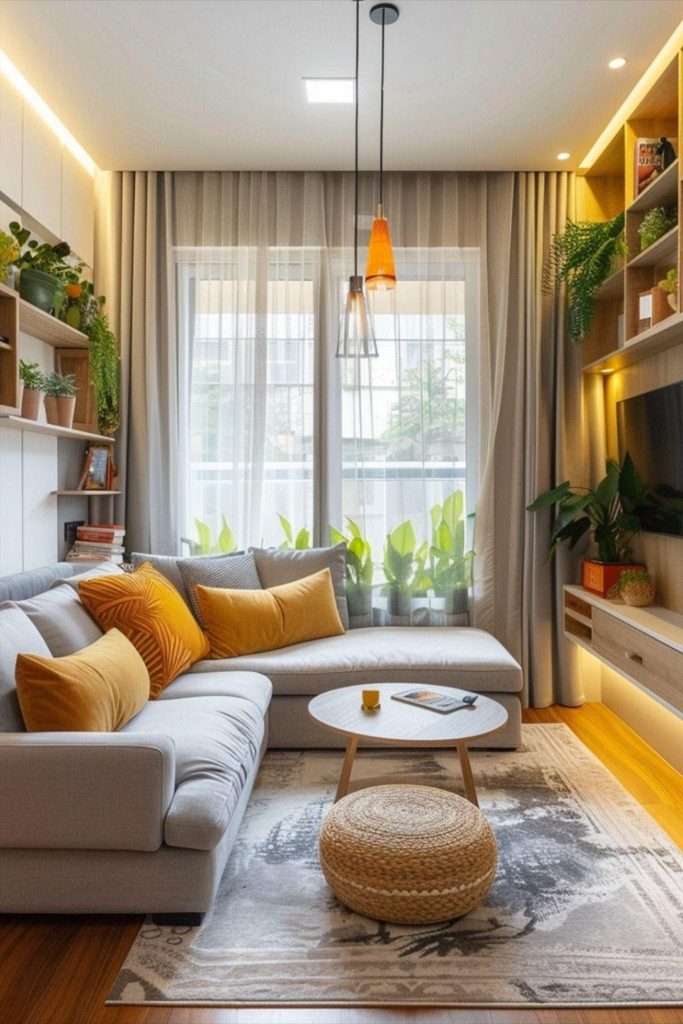
A sofa is one of the most important furniture pieces in your first apartment . It provides a place to relax, watch movies, read, and welcome guests. Choose a sofa that fits your room size without blocking walkways or making the space feel crowded.
Measure your available area before shopping. Consider the sofa’s width, depth, and height, as well as how it will enter your apartment. Neutral upholstery offers flexibility, while a colorful sofa can become a statement piece. If your budget is limited, look for a durable secondhand sofa or a reasonably priced option with removable, washable covers.
4. Create a Cozy Living Room Corner
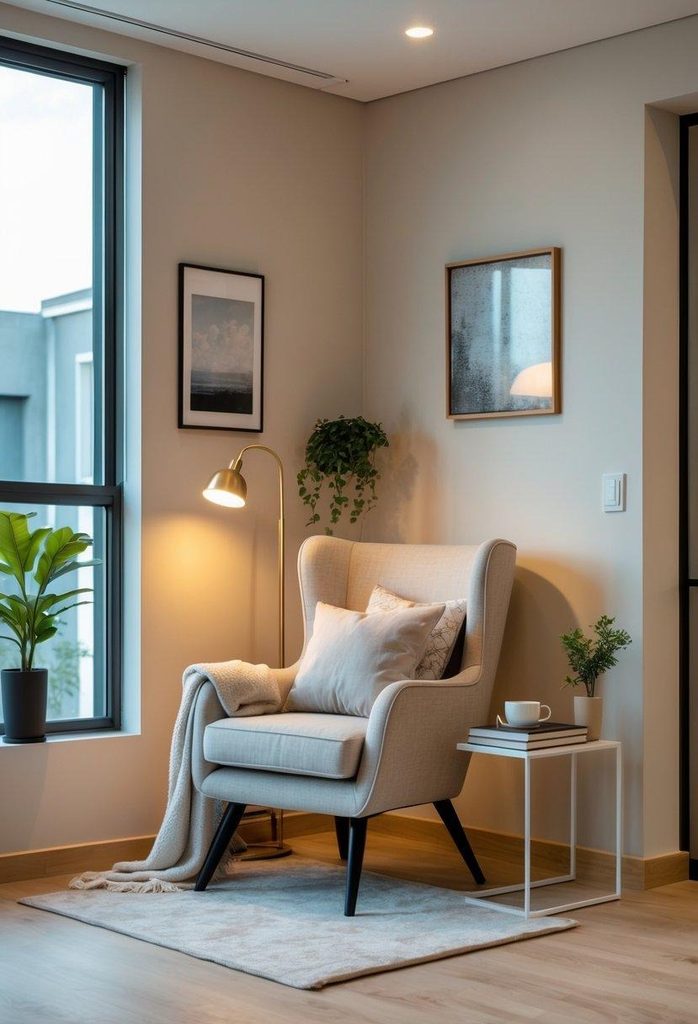
Even a small apartment can benefit from a dedicated relaxing corner. Place a comfortable armchair near a window, bookshelf, or floor lamp to create a simple reading area. If you do not have space for a full chair, use a compact accent chair or a soft floor cushion.
Add a small side table for books, coffee, or decorative items. A warm lamp can make the corner feel inviting during the evening. The goal is to create a space that serves a clear purpose without filling every empty area. Small, functional corners often make an apartment feel more thoughtfully designed.
5. Use Multifunctional Furniture

Multifunctional furniture is especially useful when decorating your first apartment. A storage ottoman can work as seating, a footrest, and a place to keep blankets. A sofa bed can provide additional sleeping space for overnight guests. A dining table that doubles as a work desk can also save valuable room.
Look for furniture that meets more than one need without sacrificing comfort. Before purchasing, check its dimensions and storage capacity. Avoid buying multifunctional products solely because they offer extra features. The best choice is one that fits your daily routine and helps you use your apartment more efficiently.
6. Add a Soft Area Rug

An area rug can make your apartment feel warmer and more comfortable. It adds softness underfoot, introduces color, and helps define separate areas in an open-plan room. For example, a rug beneath the sofa and coffee table can visually establish the living room.
Choose a size that works with your furniture arrangement. A rug that is too small may look disconnected from the seating area. Consider low-pile or easy-to-clean materials if you have pets or expect frequent use. Neutral rugs create a subtle foundation, while patterned rugs can add personality to a simple room.
7. Decorate With Indoor Plants

Indoor plants are a simple way to bring natural beauty into your first apartment. They add color, texture, and visual interest without requiring major changes to the room. Plants such as pothos, snake plants, and spider plants are popular choices, although their care needs vary.
Place plants on shelves, side tables, windowsills, or plant stands based on their light requirements. If your apartment receives limited natural light, choose suitable low-light plants or consider realistic artificial greenery. Avoid overcrowding your space with too many pots. A few thoughtfully placed plants can create a fresh and relaxing atmosphere.
8. Install Warm and Layered Lighting
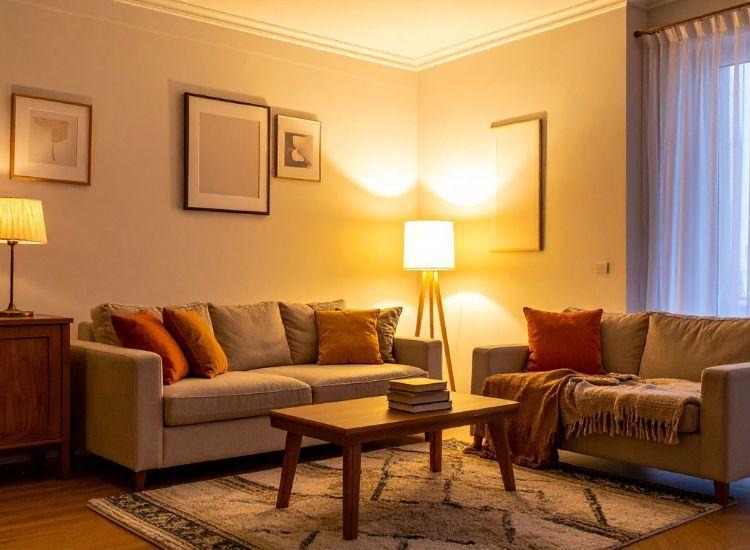
Good lighting can change how your apartment looks and feels. Instead of relying on one ceiling light, combine different sources such as table lamps, floor lamps, wall lights, and available natural light. This creates a more flexible environment for relaxing, working, and entertaining.
Use brighter lighting where you need to focus, such as a desk or kitchen counter. Softer lighting can work well in the living room during the evening. Select bulbs based on the atmosphere you want, and check the fixture’s compatibility before installation. If you rent, use removable or non-permanent lighting solutions when necessary.
9. Make the Bedroom Feel Relaxing
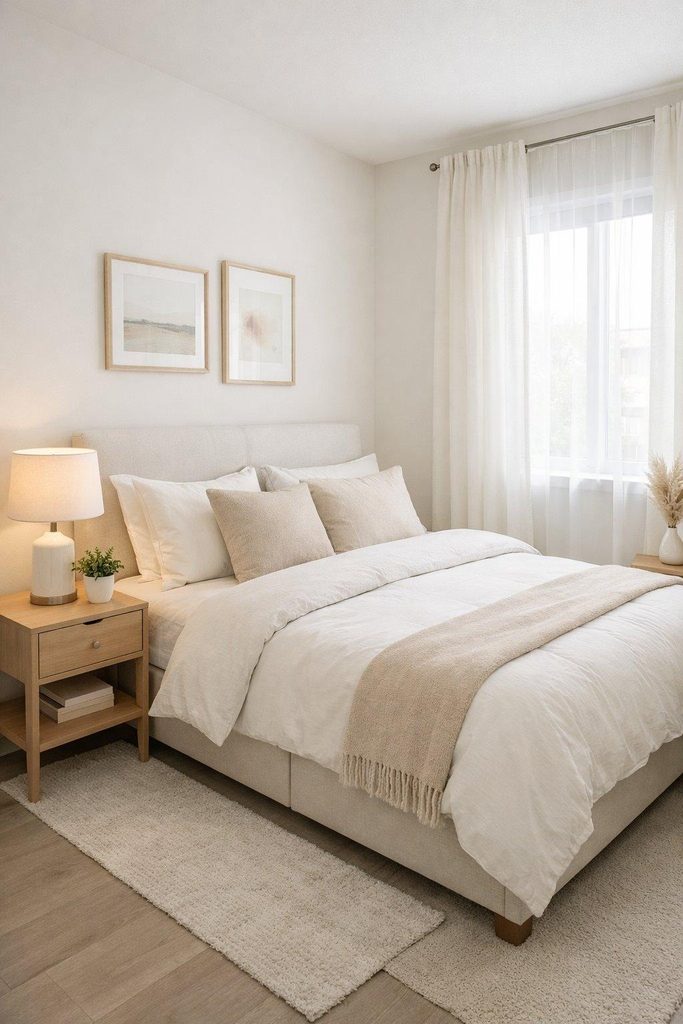
Your bedroom should be a comfortable place to rest after a busy day. Start with bedding that feels pleasant and suits your preferred colors. Add pillows, a lightweight blanket, and curtains to create a soft, layered appearance.
Keep the design simple if your bedroom is small. A compact nightstand, a suitable bed frame, and practical storage can provide the essentials without overwhelming the room. Choose calming colors and reduce unnecessary clutter on visible surfaces. Comfortable bedding and a tidy layout often make a bigger difference than expensive decorative pieces.
10. Choose Space-Saving Bedroom Furniture

Smart furniture choices can help you make the most of a small bedroom. Consider a bed with built-in drawers, under-bed storage containers, or a narrow wardrobe that fits your available wall space. A wall-mounted shelf can replace a bulky bedside cabinet in some layouts.
Measure the room carefully before buying anything. Leave enough space to move comfortably around the bed and access storage. Avoid purchasing oversized furniture simply because it looks attractive in a showroom. A practical bedroom arrangement should support your daily routine while maintaining a clean and peaceful appearance.
11. Create a Functional Entryway
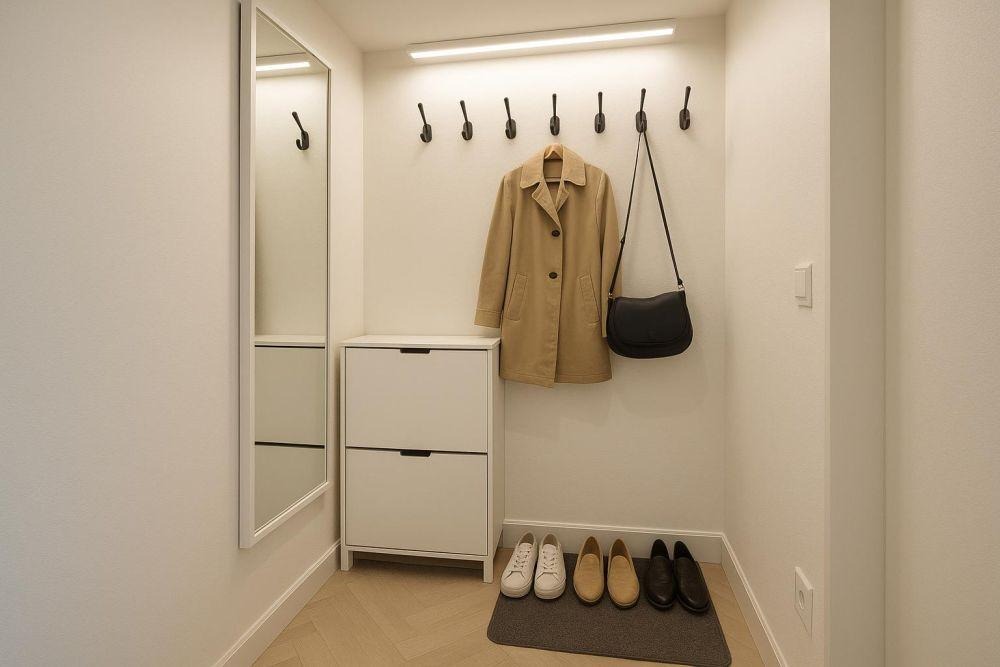
Your entryway is the first part of your apartment that you and your guests see. Even if you only have a narrow area near the door, you can make it useful with a few simple additions. Install removable hooks where permitted, add a small shoe organizer, or use a narrow console table.
A mirror can help make the entryway feel more open while providing a convenient place for a final look before leaving. Keep everyday items organized in baskets or trays. A functional entryway reduces clutter and gives your apartment a more finished appearance from the moment you walk inside.
12. Add Wall Art That Reflects Your Personality
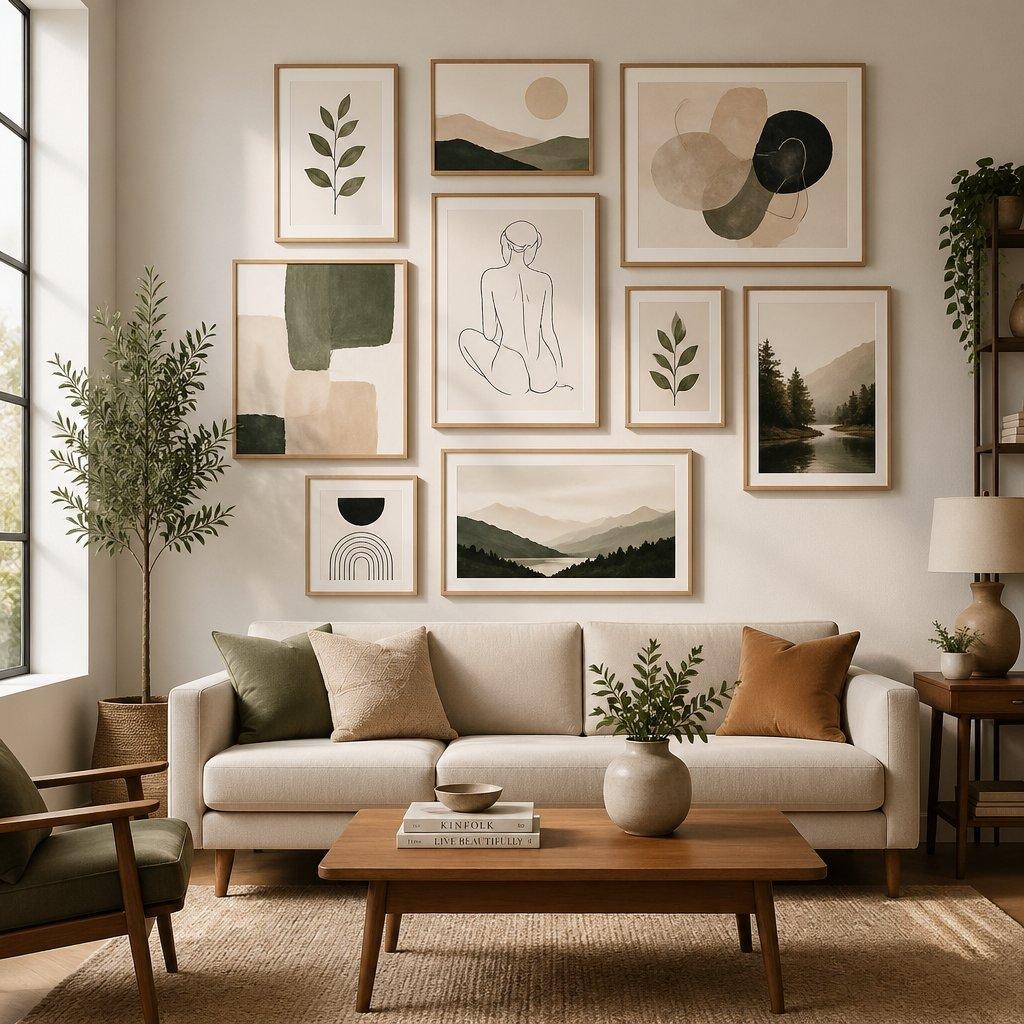
Wall art is an excellent way to personalize your first apartment. Choose prints, photographs, illustrations, or paintings that reflect your interests and preferred aesthetic. You can create a gallery wall or display one large piece above a sofa, bed, or desk.
Mix different frame styles carefully if you want an eclectic look, or use matching frames for a more coordinated appearance. Before hanging anything, arrange the artwork on the floor to test spacing and proportions. If your lease restricts drilling, consider removable hanging products that are suitable for your wall type and artwork weight.
13. Use Mirrors to Enhance the Space
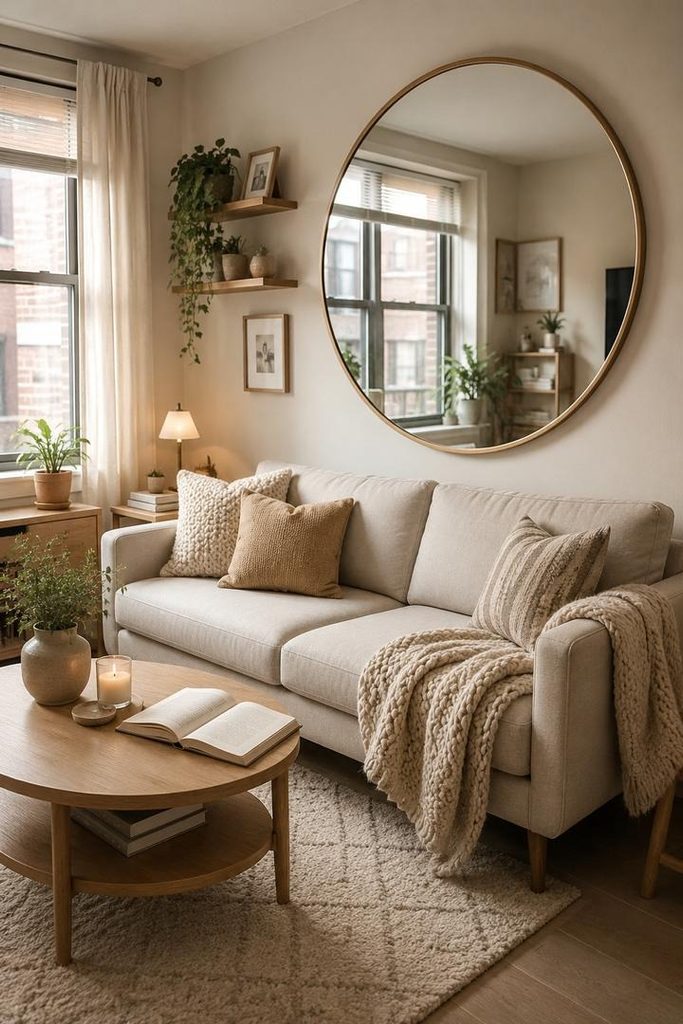
Mirrors can add style and help reflect light around your apartment. A large mirror placed near a window may make a room feel brighter, depending on the layout and available light. Decorative mirrors can also act as attractive focal points in a hallway, bedroom, or living room.
Choose a mirror that fits your wall and furniture proportions. Round mirrors offer a softer look, while rectangular designs can complement modern interiors. Think about what the mirror reflects before positioning it. A well-placed mirror can enhance the room, but placing it opposite clutter may draw attention to areas you would rather keep subtle.
14. Design a Small Dining Area

You do not need a large dining room to enjoy meals comfortably. A small round table, a compact square table, or a wall-mounted dining surface can work well in a first apartment. Select furniture based on the available floor space and the number of people who regularly use it.
For particularly tight layouts, consider a foldable table or a design with extendable sections. Add comfortable chairs and a simple centerpiece to make the area feel welcoming. Keep the tabletop relatively clear when not in use so the space remains practical for other activities, such as studying or working.
15. Organize the Kitchen Countertops
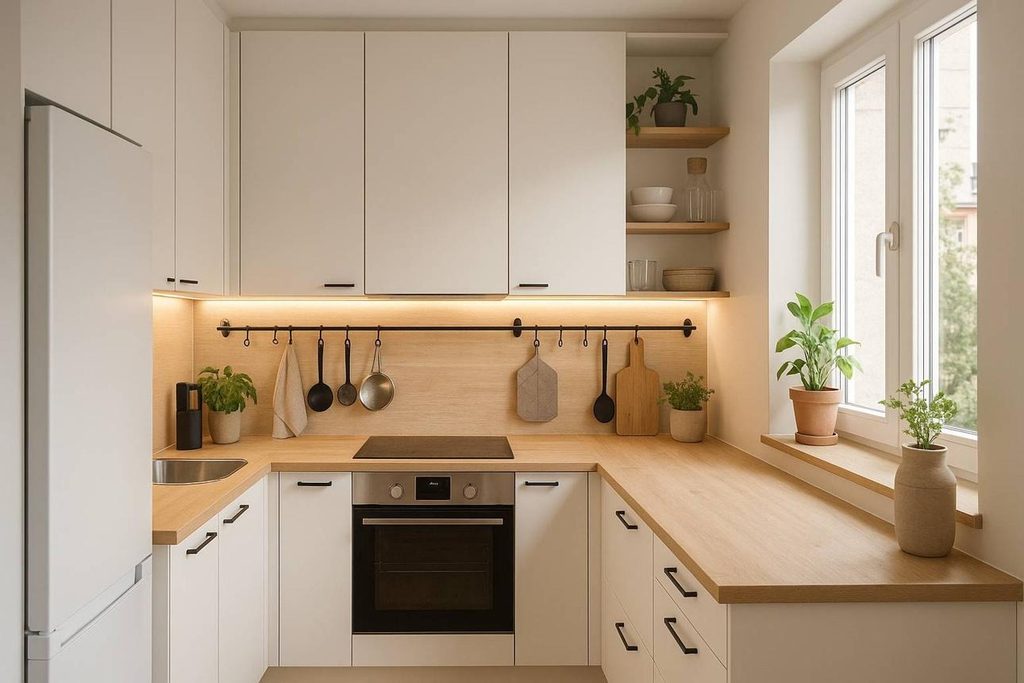
A tidy kitchen can make your first apartment feel more organized and pleasant. Start by keeping frequently used appliances within easy reach while storing less-used items in cabinets or drawers. Use trays to group cooking oils, seasonings, or coffee supplies.
Avoid filling every available countertop with decorative objects. Leave enough space for food preparation and cleaning. If storage is limited, consider a compact rolling cart, shelf riser, or wall-mounted organizer, provided it is suitable for your rental. A functional kitchen layout saves time and helps prevent clutter from building up.
16. Add Open Shelving for Display
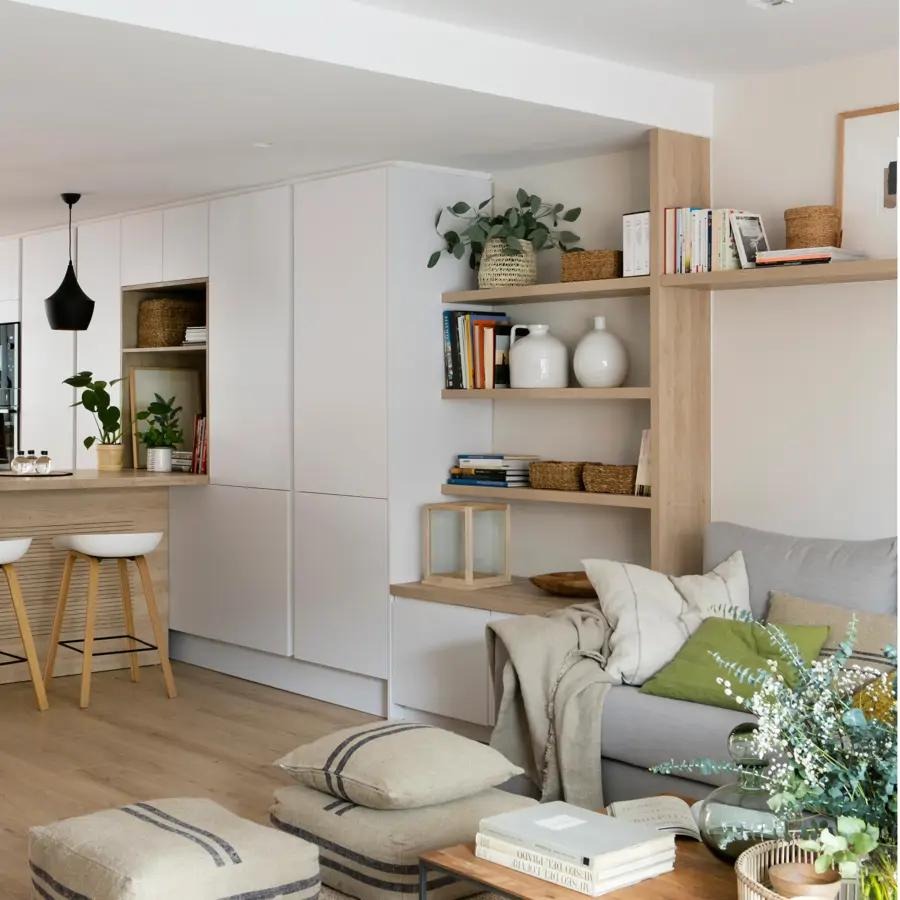
Open shelves can combine storage and decoration in one practical feature. Use them to display books, small plants, framed prints, ceramics, or everyday items. They are especially useful when you want to make vertical use of wall space.
Arrange objects at different heights to create visual variety. Leave some open space so the shelves do not appear crowded. In the kitchen, store items you use regularly, but consider dust and cleaning needs. If you rent, check whether wall mounting is allowed or explore freestanding shelving alternatives.
17. Introduce Textures for More Comfort
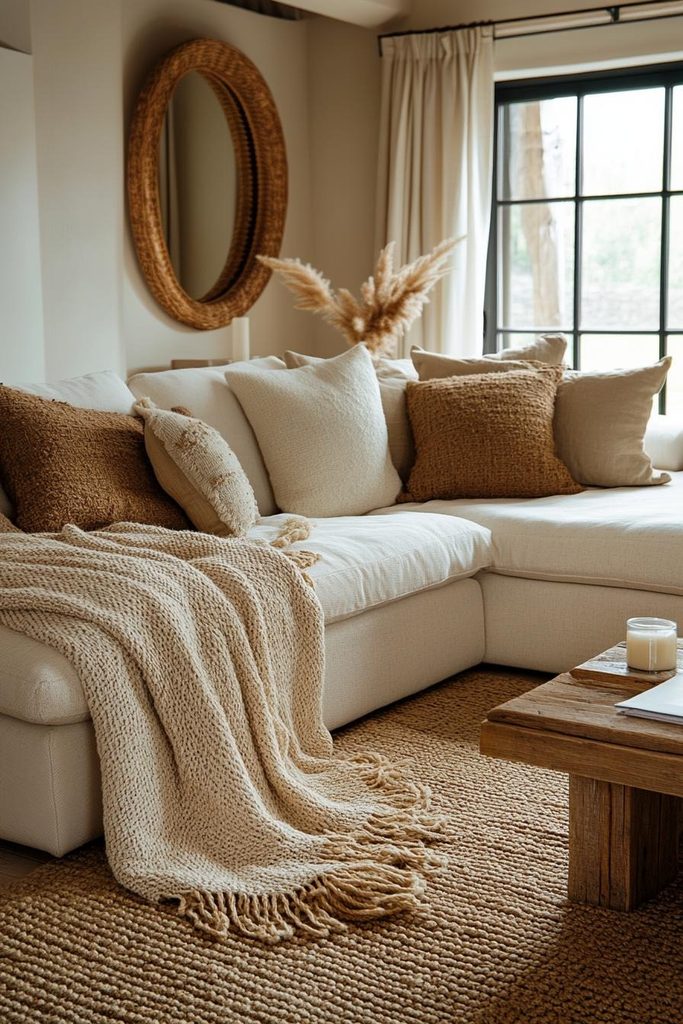
A room can feel more inviting when you combine different textures. Soft blankets, woven baskets, cotton cushions, linen curtains, and textured rugs can add depth to a simple interior. You do not need many decorative objects to achieve a comfortable look.
For a balanced design, combine smooth surfaces with natural or woven materials. For example, a simple sofa can look warmer with a knitted throw and textured pillows. Choose fabrics based on your climate, cleaning preferences, and lifestyle. Textures should improve comfort and appearance without making the room difficult to maintain.
18. Create a Small Work-From-Home Space
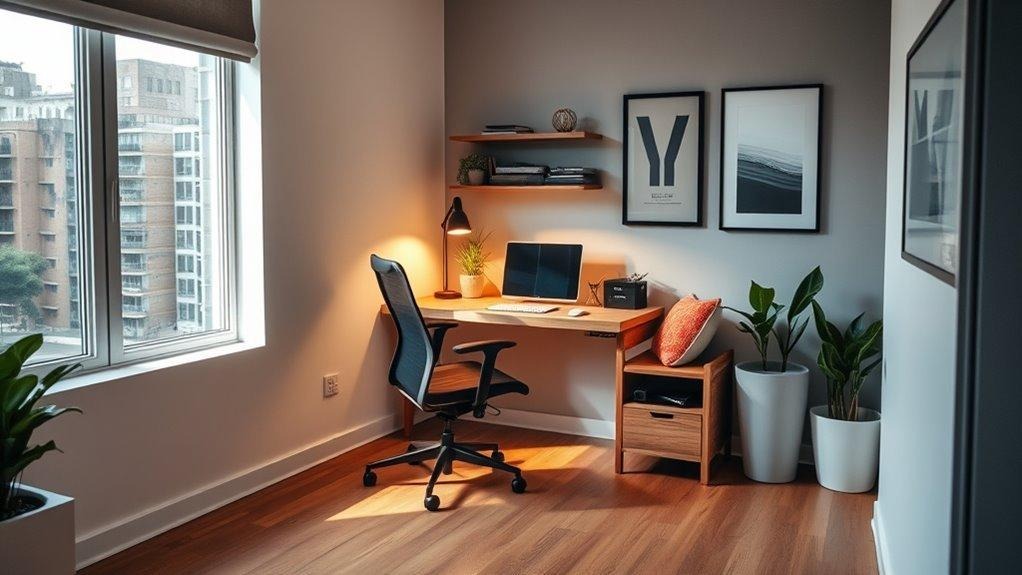
If you study, freelance, or work from home, a dedicated workspace can help separate work from relaxation. A compact desk against a wall or near a window may be enough for your laptop and essential supplies. Choose a comfortable chair and make sure the desk height works for your posture.
Use a desk organizer, cable management clips, and a nearby shelf to keep the area neat. If you do not have room for a permanent office, consider a foldable desk or a dining table that can serve multiple purposes. Prioritize comfort, adequate lighting, and reliable internet access over unnecessary decorations.
19. Use Baskets for Stylish Storage
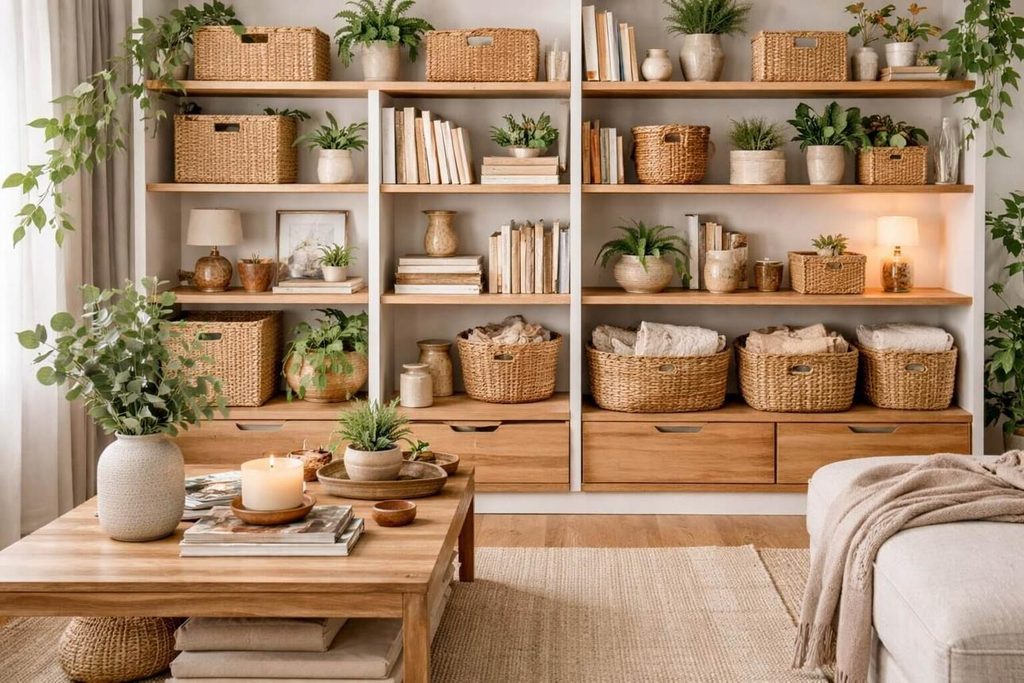
Storage baskets are a practical decorating solution for a first apartment. They can hold blankets, books, accessories, cleaning supplies, or other everyday items. Woven baskets add natural texture, while fabric and plastic options offer different styles and maintenance benefits.
Place baskets beneath shelves, beside a sofa, or inside an open storage unit. Choose sizes that fit the items you plan to store. Labeling baskets can make it easier to find things, especially if you share your apartment. Good storage should make everyday organization simpler rather than create extra work.
20. Decorate With Curtains

Curtains can improve the appearance and comfort of your apartment. They add softness to windows, provide privacy, and can help manage sunlight. Choose a fabric and color that complement your existing furniture and walls.
Light-colored curtains can create an airy look, while heavier options may offer more privacy and light control. Measure your windows before buying, and check whether your landlord allows drilling or permanent curtain hardware. Depending on your needs, tension rods or removable solutions may be useful. Prioritize functionality alongside appearance when choosing window treatments.
21. Add a Statement Accent Wall
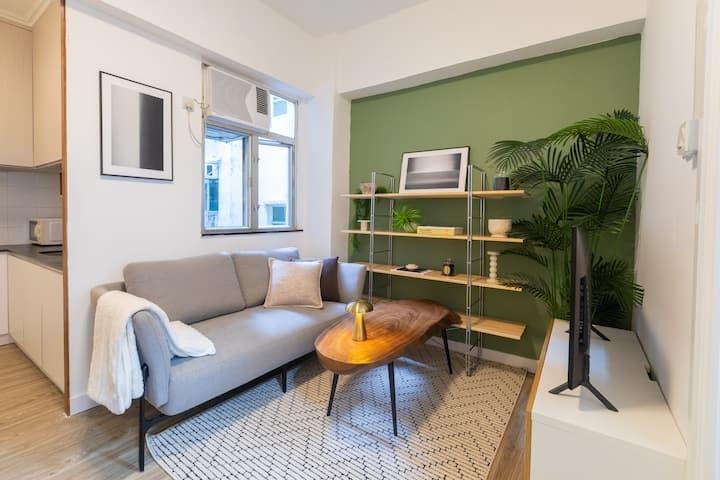
An accent wall can bring personality to your apartment without requiring a complete redesign. You might use paint, removable wallpaper, or a carefully arranged gallery of artwork. Choose a wall that naturally attracts attention, such as the wall behind your bed or sofa.
If you rent, check the lease before painting or applying wallpaper. Removable products vary in suitability depending on the wall surface and installation method. For a subtle effect, use a muted green, warm beige, or soft blue. For a stronger statement, select a deeper shade that complements your furniture and lighting.
22. Personalize the Bathroom

Your bathroom deserves attention when decorating your first apartment. Simple updates, such as coordinated towels, a shower curtain, a bath mat, and attractive storage containers, can improve the overall appearance. Select accessories that fit the available space and withstand moisture.
Use baskets or small organizers to keep toiletries in order. A countertop tray can group everyday essentials, while wall-mounted storage may help reduce clutter if installation is permitted. Avoid blocking ventilation or placing unsuitable materials in damp areas. Small improvements can make a basic rental bathroom feel more comfortable and organized.
23. Choose a Consistent Metal Finish

Small hardware and metal accents can influence the overall look of your apartment. Black, brass, chrome, and brushed nickel each create a different visual effect. Choosing a consistent finish for selected accessories can help your decor feel intentional.
You do not need to replace existing fixtures to achieve this look. Instead, introduce your preferred finish through lamps, picture frames, trays, or decorative objects. If you mix metals, repeat each finish in a few places to create balance. Work with the fixtures your apartment already has, especially if you are renting.
24. Use a Small Coffee Table
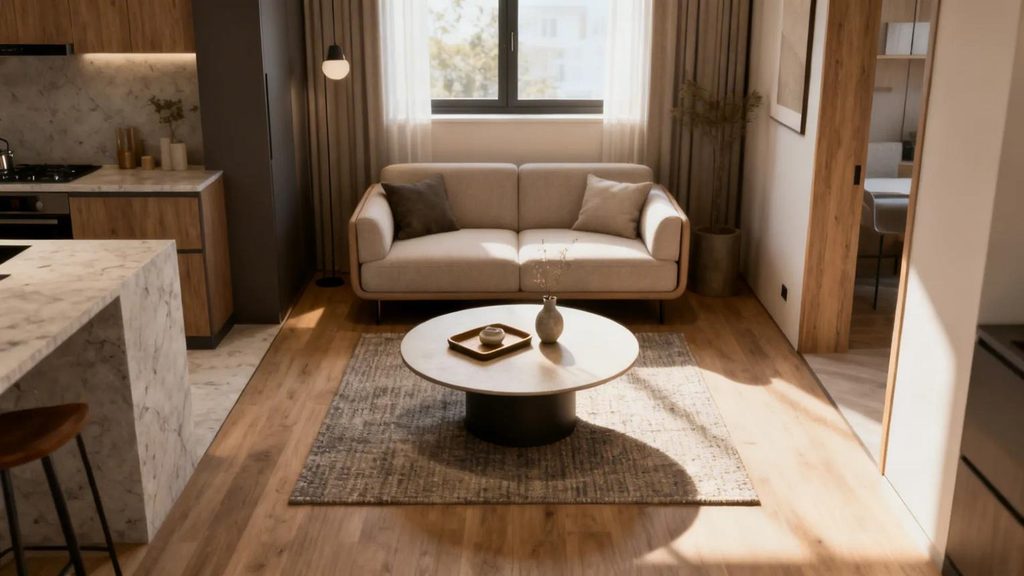
A coffee table can make a living room more functional and visually complete. It offers space for drinks, books, candles, or small decorative pieces. For a compact apartment, choose a table that leaves enough room to walk around the seating area.
Round and oval tables can work well in some layouts because they reduce sharp corners. Nesting tables are another option when you want flexible surface space. Select a size that matches your sofa and room proportions. Avoid adding a large table that limits movement or makes the seating arrangement uncomfortable.
25. Create a Relaxing Balcony or Window Area

If your apartment has a balcony, patio, or wide windowsill, turn the area into a comfortable spot for relaxing. A compact outdoor chair, a small table, and suitable plants can create a pleasant retreat. For a window area, a comfortable chair and a nearby lamp may be enough.
Choose furniture that suits outdoor conditions if the space is exposed to rain or sunlight. Check building rules before adding hanging planters or heavy objects. Keep walkways clear and ensure furniture is stable. A thoughtfully arranged small outdoor area can add another useful place to enjoy your home.
26. Shop Secondhand and Set a Budget

Decorating your first apartment does not require buying everything new. Secondhand furniture, thrifted accessories, local marketplaces, and clearance sales can help you find useful items at different price points. However, inspect furniture carefully for damage, odors, and signs of pests before bringing it home.
Create a budget that includes essential furniture, lighting, storage, and decorative items. Prioritize things you need immediately, such as a bed, seating, and basic kitchen supplies. Buy decorative pieces gradually as you learn how you use the space. A phased approach can reduce unnecessary purchases and make decorating more manageable.
27. Keep Your Apartment Clutter-Free

The final step in decorating your first apartment is maintaining a balance between style and organization. Even a beautifully designed space can feel uncomfortable when surfaces are crowded and items do not have a designated place. Create simple routines for putting things away, cleaning, and reviewing what you actually use.
Avoid purchasing decorations just to fill empty areas. Instead, choose objects that serve a purpose or bring genuine enjoyment. Use closed storage for items you do not want on display, and keep frequently used belongings easy to access. A clean, practical home is easier to enjoy and adapt as your needs change.
How to Decorate Your First Apartment on a Budget
Decorating a first apartment on a budget is easier when you follow a clear order of priorities. Start with essential furniture, including a bed, seating, and any necessary dining or work surfaces. Then improve lighting, storage, and comfort before purchasing decorative accessories.
Consider these budget-friendly strategies:
- Buy essential furniture first: Focus on items you use every day.
- Shop secondhand: Look for quality furniture through reliable local sellers.
- Use affordable textiles: Pillows, blankets, and curtains can update a room.
- Decorate gradually: Avoid spending your entire budget in the first week.
- Repurpose existing items: Give old furniture or containers a new purpose.
- Compare prices: Check multiple stores before making larger purchases.
Your apartment does not need to look finished immediately. Allow your style to develop over time.
Common First Apartment Decorating Mistakes to Avoid
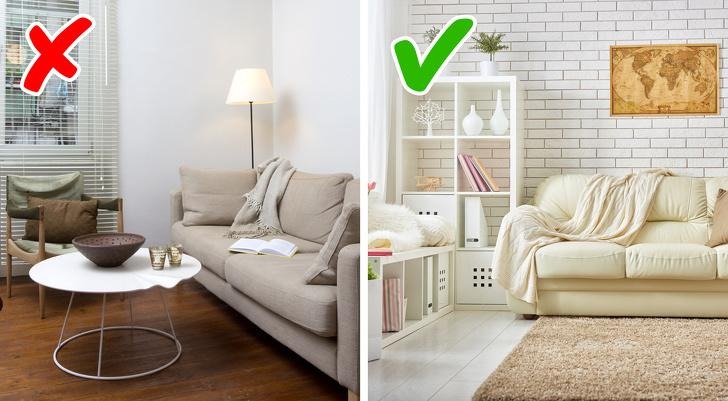
When decorating your first apartment, it is easy to focus on appearance and overlook practical details. Buying furniture before measuring the room, choosing too many colors, or filling every surface with accessories can make the space less comfortable.
Here are several mistakes to avoid:
- Buying oversized furniture: Always measure your rooms and doorways first.
- Ignoring storage: Plan where everyday items will go before clutter builds up.
- Using poor lighting: Combine practical and ambient lighting where possible.
- Choosing style over comfort: Furniture should support your daily activities.
- Skipping a budget: Track purchases to avoid unnecessary spending.
- Ignoring rental rules: Check permissions before making permanent changes.
Thoughtful planning helps you create an apartment that looks attractive and works well for your lifestyle.
How to Make a Small First Apartment Feel Bigger
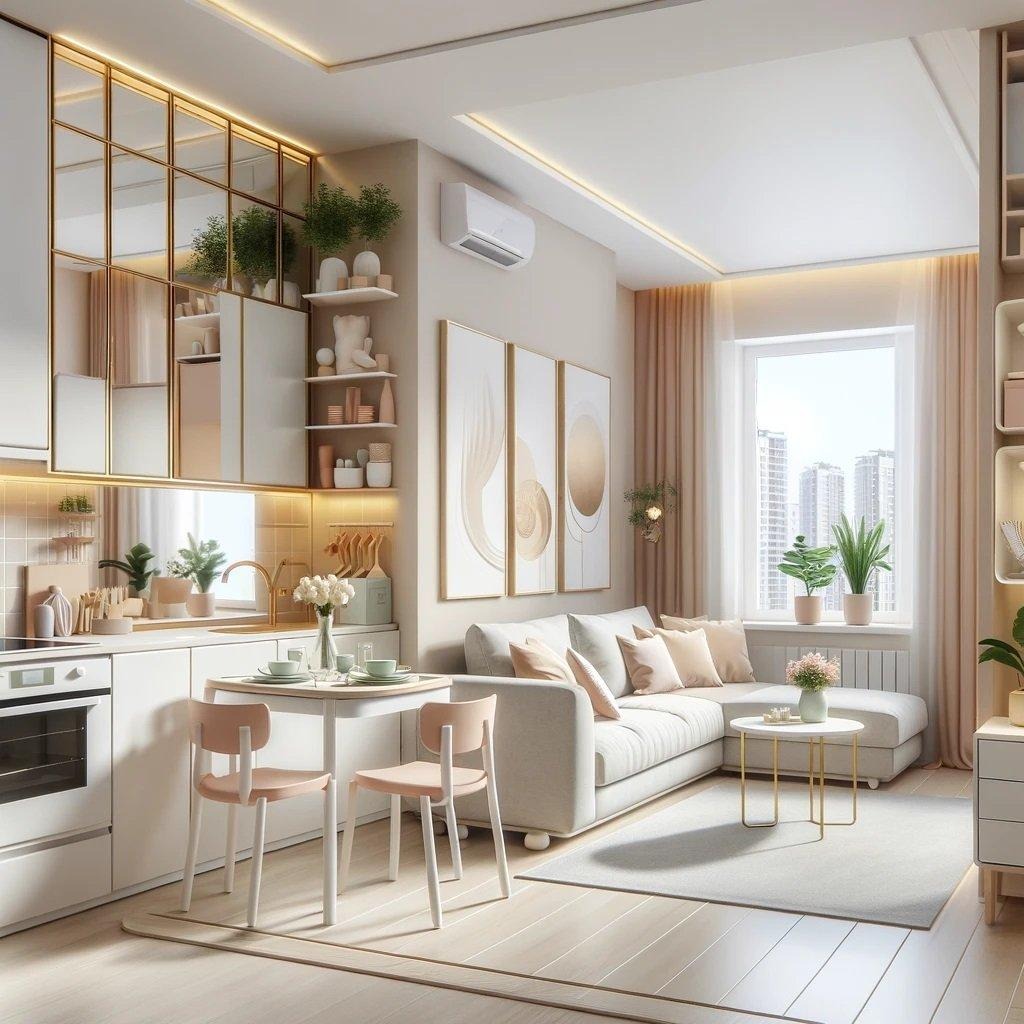
A small apartment can feel more spacious when furniture placement, lighting, and storage work together. Use light colors if they suit your preferences, keep pathways clear, and choose furniture that fits the scale of your room. Mirrors can reflect light, while vertical shelving helps use wall space.
Avoid blocking windows with large furniture or overcrowding the center of the room. Multifunctional pieces can reduce the number of items you need. Keeping a consistent visual palette may also help the space feel connected. The goal is not to make every room look empty, but to create enough space for comfortable movement and everyday activities.
Frequently Asked Questions About First Apartment Decorating
1. What should I buy first for my first apartment?
Start with essential items such as a bed, mattress, basic seating, lighting, and kitchen supplies. The exact priorities depend on whether the apartment is furnished and what you already own. Create a checklist before shopping to avoid unnecessary purchases.
2. How can I decorate my first apartment cheaply?
Use secondhand furniture, affordable textiles, DIY artwork, and multifunctional storage. Decorate in stages rather than buying everything at once. Compare prices and focus on items that offer practical value.
3. What decorating style is best for a first apartment?
There is no single style that suits everyone. Modern, minimalist, boho, Scandinavian, and eclectic styles can all work. Choose a design direction that matches your preferences, space, budget, and maintenance needs.
4. How do I decorate a small apartment without making it crowded?
Choose appropriately sized furniture, use vertical storage, and leave clear walkways. Select a limited color palette and avoid buying too many decorative pieces. Multifunctional furniture can also help maximize available space.
5. How can I make a rental apartment feel like home?
Add removable artwork, rugs, curtains, plants, lighting, and personal accessories where permitted. Work with existing fixtures instead of making changes that violate your lease. Small, reversible updates can create a more personalized environment.
Final Thoughts
Decorating your first apartment is an opportunity to create a home that feels comfortable, functional, and uniquely yours. From choosing a decorating style and investing in practical furniture to adding plants, artwork, and smart storage, small decisions can make a meaningful difference.
The 27 first apartment decorating ideas in this guide can help you plan your space without feeling pressured to spend too much money. Focus on your daily needs, choose items thoughtfully, and allow your apartment to evolve over time.
Whether you live in a studio, a small one-bedroom, or a larger rental, the best home is one that supports your lifestyle and makes you feel comfortable. Start with the essentials, add your personal style, and enjoy the process of creating your first home.